
Market Snapshot#
August 21 was not a generic green-day summary. The strongest story in the public @GTMO channel record was the reset: four parameterized BUY setups were shared, the second BUY was explicitly marked as failed, and the first, third and fourth setups were later summarized publicly as 4/4 target runs. That sequence is more useful than a clean headline because it keeps the miss, the recovery and the protection language in the same frame.
If you want free signals and FREE VIP channel access, message @GTMOBest early and follow the public updates. This page is a historical recap of a completed session, not a live instruction.
The wider market offered a bullish but unsettled backdrop. A delayed GC00 futures quote showed about $4,638 at one intraday observation, with a day range around $4,565.50-$4,661.70. Direct market pages displayed DXY near 98.79 and the US 10-year yield near 4.72% on August 21. Those figures are approximate, time-sensitive snapshots rather than a final spot close or a final New York settlement. The market context supports the story; it does not prove any GTMO result.
| Reference | Same-day observation | Editorial boundary |
|---|---|---|
| Gold futures | About $4,638 at one delayed GC00 snapshot | Not a final spot or settlement claim |
| DXY | About 98.79 on the daily market page | Not an exact 14:00 UTC tick |
| US 10Y yield | About 4.72% on the daily market page | Approximate context only |
| GTMO session | 4 BUY setups; 3 public 4/4 reports; 1 failed BUY | Historical public-record recap |
Why The Tone Changed So Fast#
The first BUY moved quickly enough for the public record to report staged target progress, partial profit-taking and breakeven protection. The second BUY then met the opposite reality: after the position had been managed through a difficult move, the channel said the setup failed and that it would look for another entry. That sentence is important because it prevents the later recovery from rewriting the earlier result.
The tone changed again when the next parameterized BUY was shared from a lower zone. The public record kept the risk-reset language visible, reported target progression and later summarized the third BUY as a 4/4 run. A fourth BUY then produced another 4/4 end-of-day summary. The session therefore reads as a sequence of decisions, not as one uninterrupted winning trade.
That is also what separates this recap from a generic scoreboard. The August 20 recap described a failed BUY followed by a recovery SELL, while August 21 stayed on the BUY side but still recorded one failed read. The direction was consistent only after the risk boundary was allowed to change.
Technical Outlook#
The documented technical framework was specific but historical. The first BUY used 4583-4580 with a 4576 stop and targets at 4586, 4588, 4590 and 4592, followed by an open extension. The failed second BUY used 4591.7-4587 with a 4581 stop and targets at 4594, 4596, 4598 and 4600. The later two BUYs used 4588.4-4584 with a 4579 stop and 4592-4588 with a 4584 stop.
The wider market references placed approximate resistance near $4,600 and $4,620-$4,640, with approximate support near $4,545 and $4,500-$4,514. These levels belong to the same-day context and should not be copied into a new session. A future decision would need fresh price action, a fresh invalidation point and fresh public evidence.
The useful technical lesson is the relationship between zone, stop and target ladder. A zone without invalidation is incomplete. A target list without a later result is only a plan. A result screenshot without session context cannot prove that every account received the same fill. August 21 supplied enough sequence evidence to explain what happened, but not enough to promise what happens next.
Trading Signals#
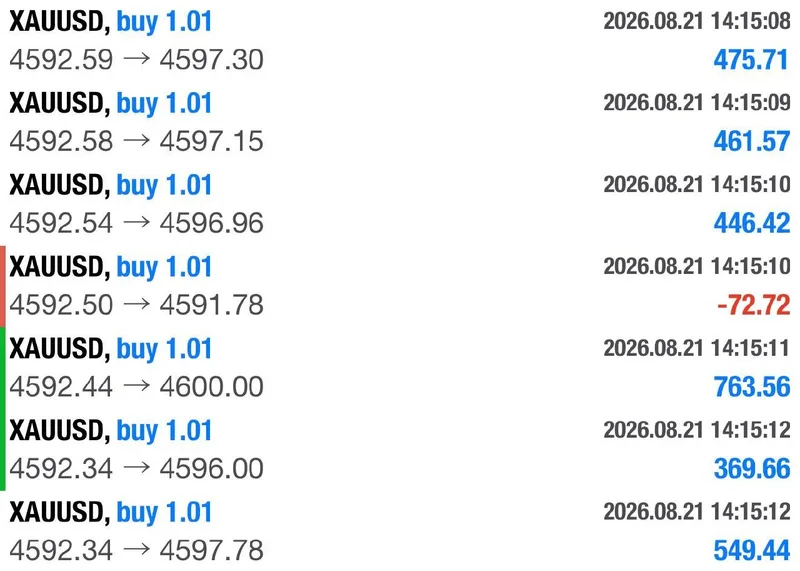
Signal 1 — BUY 4583-4580#
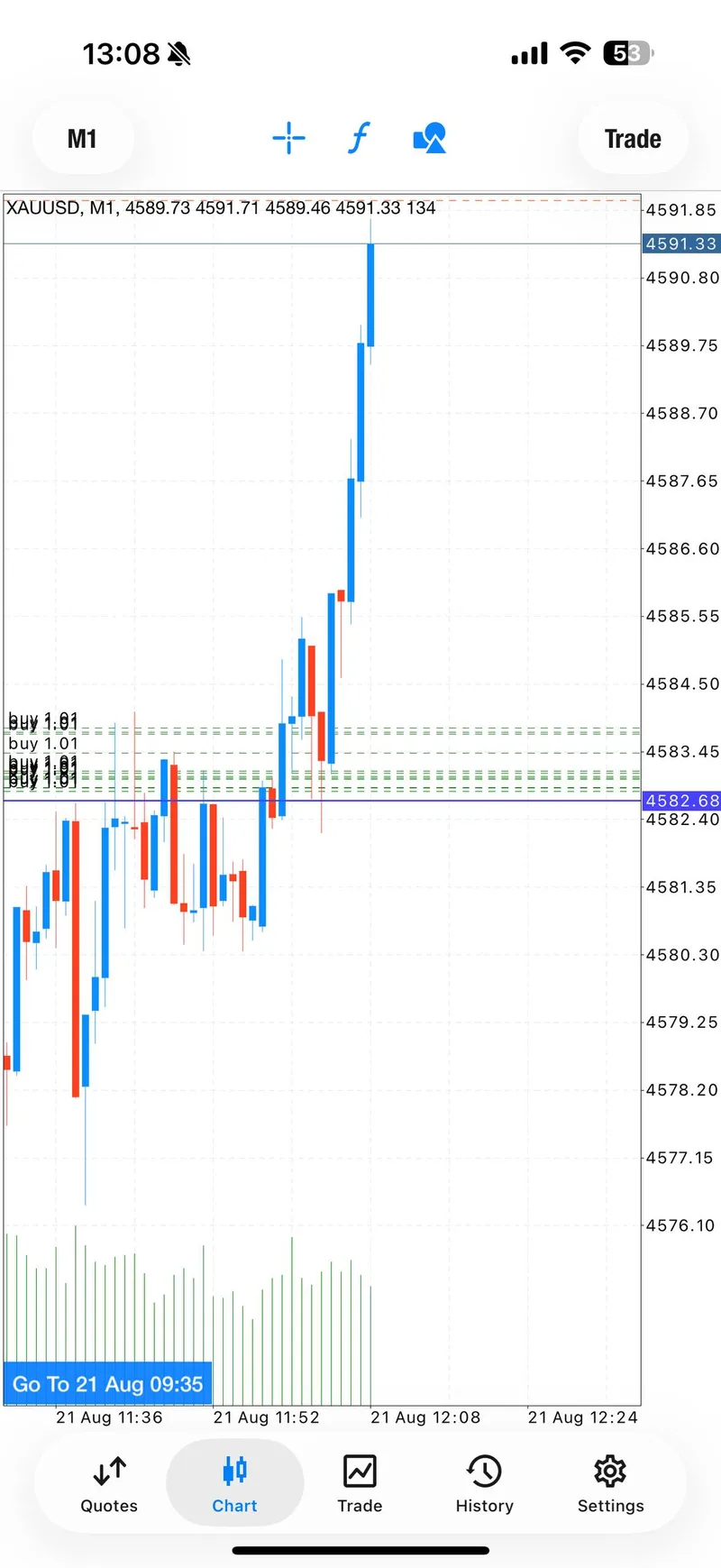
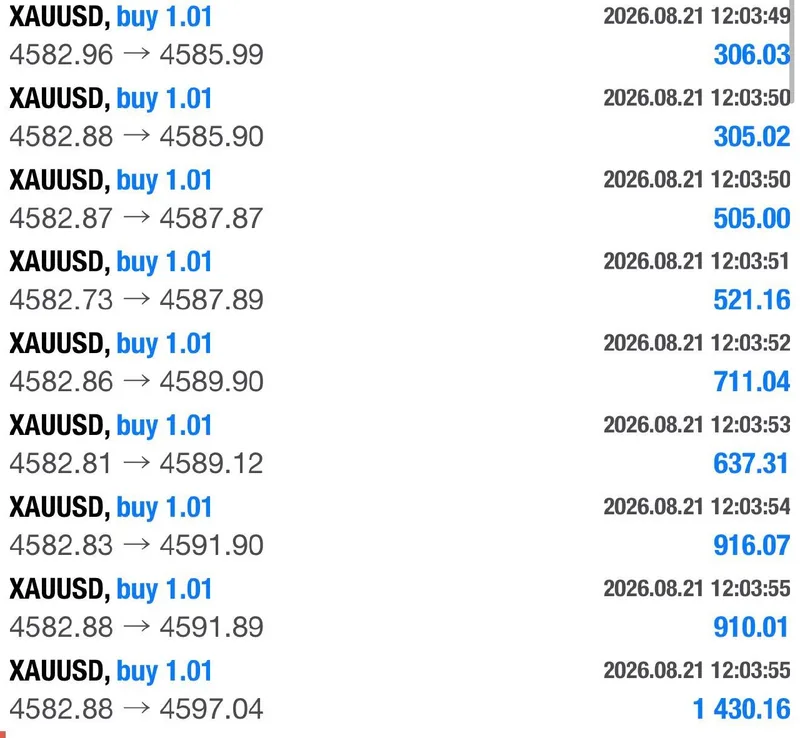
The first historical setup was a BUY from 4583-4580 with SL 4576 and targets at 4586, 4588, 4590 and 4592, followed by an open extension. The public updates described TP1, TP2 and TP3 progression, then said TP4 was approaching, 60% of profits should be taken and the remaining risk should be moved to breakeven.
The same sequence later used 100+, 120+ and 160+ pips language in the public record. The end-of-day recap reported 4/4 targets for the first BUY and described a 140+ pip peak. Those are public session statements, not an audited universal PnL result. The selected proof screenshot shows the trade sequence and protection update as historical evidence.
Signal 2 — BUY 4591.7-4587#
The second setup was a BUY from 4591.7-4587 with SL 4581 and targets at 4594, 4596, 4598 and 4600, followed by an open extension. The setup initially moved through a difficult range, and the public channel later said plainly: setup failed, do not hold the trade.
The follow-up messages described a search for another entry and an attempt to recover the sequence. The end-of-day summary kept this setup as the failed second BUY while crediting the later third BUY with 4/4 targets. No target, pips or profit claim is attached to Signal 2. That boundary stays in the article because a recovery is not the same thing as changing the result of the failed setup.
Signal 3 — BUY 4588.4-4584#
The third parameterized setup was a BUY from 4588.4-4584 with SL 4579 and targets at 4591, 4593, 4595 and 4597, followed by an open extension. The public record clarified the lower entry as 4584 in the corrected copy; this recap uses that corrected value rather than the earlier mistyped version.
The subsequent updates reported TP1, TP2 and TP3 progress, then breakeven protection and another target check. The end-of-day summary described the third BUY as 4/4 again after the second BUY had failed. The claim is kept at that level: a public target summary for the documented sequence, not a promise that every reader had the same entry or fill.
Signal 4 — BUY 4592-4588#
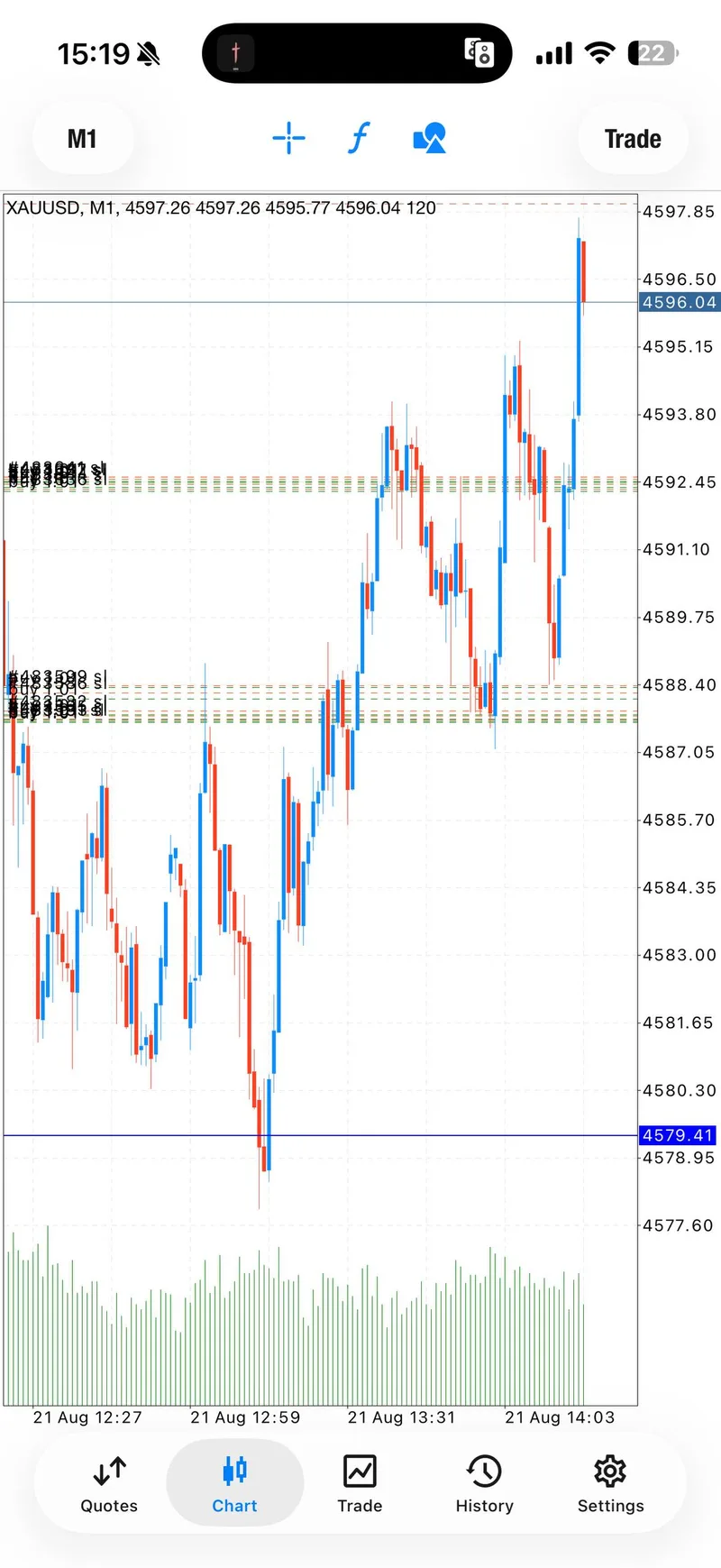
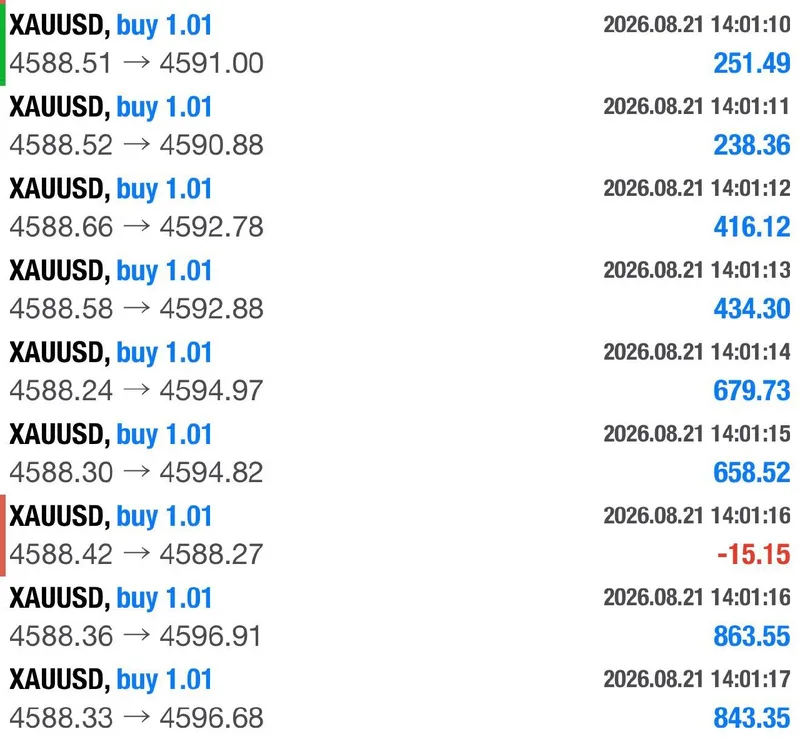
The fourth historical setup was a BUY from 4592-4588 with SL 4584 and targets at 4594, 4596, 4598 and 4600, followed by an open extension. The public updates reported breakeven protection and later referred to two 100+ pip entries before the day was closed.
The final public summary called this fourth BUY another winner and reported 4/4 targets for the third time that day. Any account display inside a proof screenshot belongs to that account and that moment only. The editorial claim remains the same-day public 4/4 report, not a universal dollar result.
Signal Performance Breakdown#
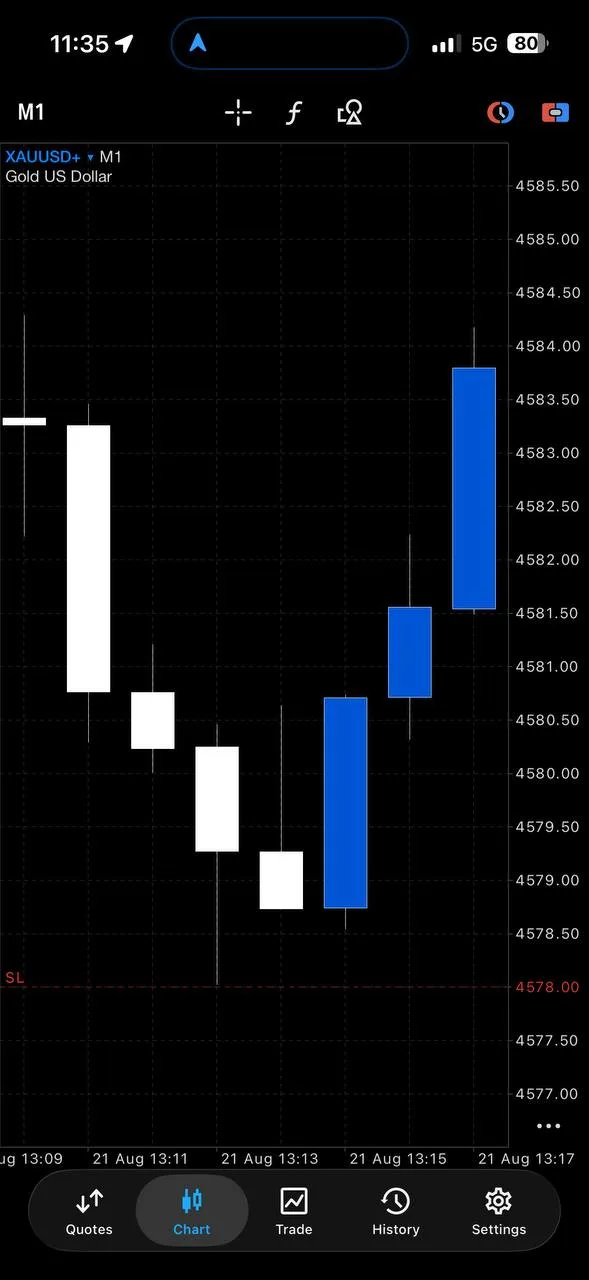
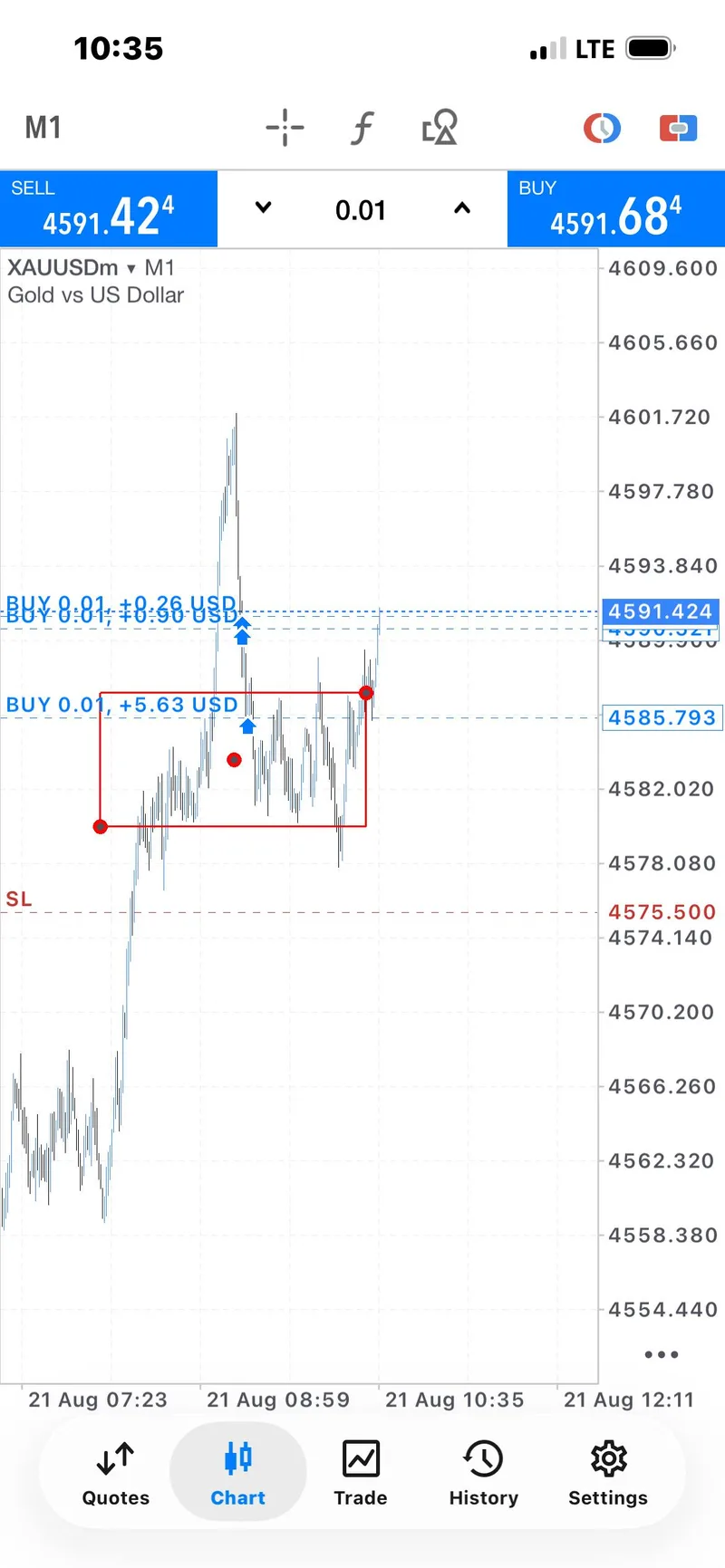
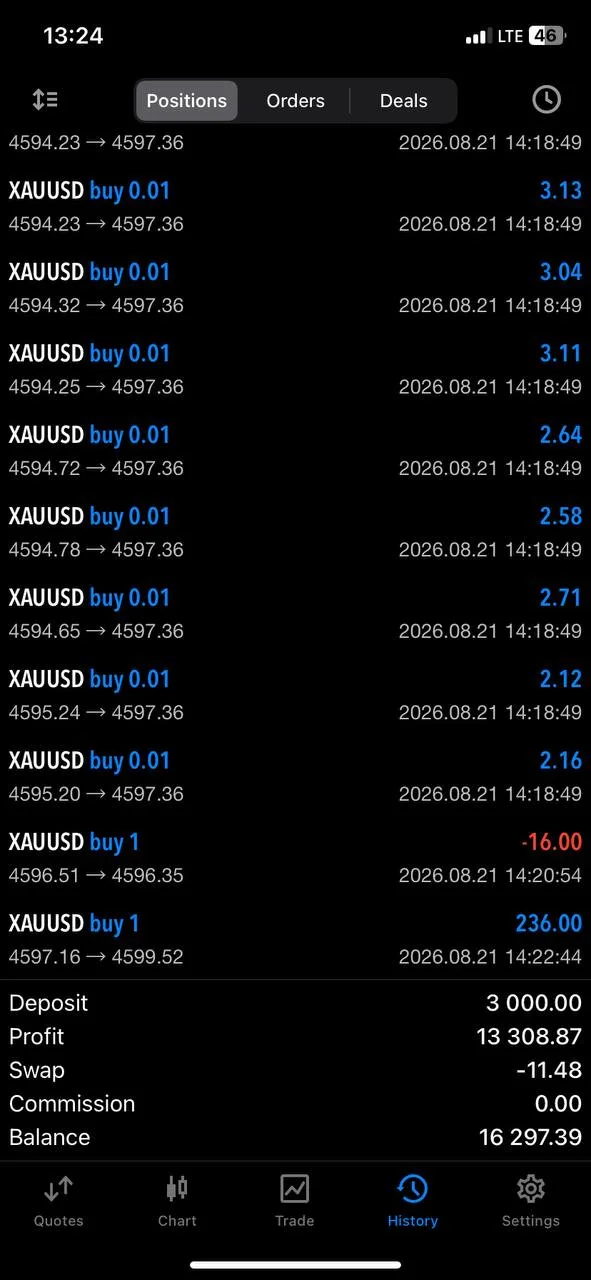
Counting each corrected parameter set once gives exactly four canonical setups. The outcome split is also exact at the editorial level: three public 4/4 target reports for Signals 1, 3 and 4, and one explicitly failed setup for Signal 2. The repeated FREE and VIP notices are mirrors of the same public sequence, not additional trades.
The media count is deliberately separate from the feedback count. Exactly 22 member feedback messages were present in the same-day public record. This recap selects eight public proof screenshots: five trading-sequence screenshots and three member-feedback screenshots. The gallery is a readable sample, not a claim that eight images equal the total response.
The member highlights are similarly bounded. One member reported $604 so far with one entry running and trailing at 4594. Another posted a $700 result. A third said profits had been closed and they were happy with the outcome. These are member-reported messages, not independently audited accounts and not evidence that every reader achieved the same result. The selected feedback screenshots show the public response stream without promoting the unsupported accuracy percentage that appeared in one comment.
The account-specific figures visible in one end-of-day screenshot are not used as the headline. The stronger story is the repeatable public sequence: defined zone, stated stop, staged targets, risk reset, explicit failure where it happened, and a later recovery that was reported in the same session.
Readers can compare that structure with the August 19 XAUUSD report and the August 17 recap. The comparison is about reporting discipline, not a promise that future days will reproduce the same target count.
Execution Lessons#
First, invalidation has to survive the headline. Signal 2 failed, and the later 4/4 reports did not turn it into a winner. Recording the loss preserved the difference between a bad read and a successful recovery.
Second, protection belongs inside the result. Signal 1 included partial profit-taking and breakeven language before the end-of-day summary. Signals 3 and 4 also carried risk-reset updates. A target milestone without the management step would be an incomplete recap.
Third, corrections should be visible but bounded. The third setup was published with a mistyped lower entry and then clarified immediately. The article uses only 4588.4-4584 in the public setup description, so the correction cannot create a second phantom trade.
Finally, past-session details must not be turned into a live call. The zones, stops and target ladders explain what the public @GTMO record documented on August 21. They do not instruct a reader to enter a new position, move a stop or assume that a later market will behave the same way.
What The Day Means Going Forward#
August 21 is best read as a recovery-and-protection session. The public record did not hide the failed second BUY, but the first, third and fourth BUYs were each summarized with a 4/4 target result. That combination creates a more credible editorial story than a single universal win-rate claim: the session had a strong directional read in parts, a clear setback in the middle and enough recovery evidence to explain how the day finished.
For readers studying Gold Trader Mo, the practical checklist is simple: identify the historical entry zone, locate the invalidation, separate target plans from target reports, and look for the point where exposure was reduced. Then reset the analysis for the next session. A past zone cannot substitute for fresh evidence.
Message @GTMOBest for free signals + FREE VIP channel access. The free lane is the place to follow new public context; this article remains a transparent record of August 21, including the failed read, the corrected entry, the three 4/4 reports and the member-feedback count.
FAQ#
How many canonical BUY setups were documented?#
Four parameterized BUY setups were counted after merging mirrored FREE/VIP notices and the immediate correction of the third entry. The end-of-day outcome messages were treated as results for those setups, not as new signals.
Was August 21 a clean win?#
No. The public record reported three 4/4 target runs, but the second BUY was explicitly marked as failed. The recap keeps both facts visible and does not claim a universal win rate or account-wide PnL.
How many member feedback messages were present?#
Exactly 22 member feedback messages were present. Eight screenshots were selected for the gallery: five trading proof screenshots and three member-feedback screenshots. Those counts are different by design.
Are the entry zones live instructions?#
No. The zones, stops and targets are historical details from the August 21 public record. They should not be copied into a later session without new market evidence, a new risk boundary and independent judgment.
Where can readers get free signals and FREE VIP channel access?#
Message @GTMOBest for the route to free signals and FREE VIP channel access. Trading involves risk, and past performance never guarantees the next session.
Connect with Gold Trader Mo#
Follow the public Gold Trader Mo updates for new context, then message @GTMOBest for free signals + FREE VIP channel access. The August 21 recap is useful because it shows the complete shape of the day: four BUY setups, one failure, three 4/4 public target reports, active protection and 22 member feedback messages kept separate from the selected gallery proof.
What readers can expect from the public recap format:
- Entry zones, direction, stop levels and target ladders when the same-day record supports them.
- Clear separation between a plan, a completed target report, a failed setup, a breakeven update and a member-reported outcome.
- A direct path to the next public update without turning yesterday's levels into today's instruction.
This content is for education and commentary only and is not financial advice. Trading involves significant risk, capital can be lost, and past performance never guarantees future results.