Market Snapshot#
An early loss. A second buy that kept swinging blue and red. Then three targets checked off at the finish. October 9 was not a smooth victory lap for Gold Trader Mo—it was a gold session that tested the trade, the patience and the decisions in between.
“TURNING BLUE RED BLUE RED BLUE RED,” Mo wrote while managing the second buy. By his final trading update, the tone had changed: “Finished the day with another 3 nice Tp‘s,” followed by TP1✅, TP2✅✅ and TP3✅✅✅. That three-target finish replied to his earlier exit message, which was attached to the second setup. The result belongs with the difficult ride that preceded it.
The public record kept both sides visible: the first loss was acknowledged, the next entry followed an analysis pause, and members later described recovery, profits and a move they called a “rocket.” Not every member fully recovered. That makes the complete sequence—not just its best screenshot—worth reading.
Want to see the explanations as they happen? Follow the public @GTMO channel, or message @GTMOBest for free gold signals and access support.
| October 9 market observation | Value |
|---|---|
| XAUUSD spot, TradingView / OANDA | $4,184.585 per troy ounce |
| Observation time | October 9, 2026, 21:41:06 Vietnam time (UTC+7) |
| Quote status | Market open; intraday snapshot, not a finalized close |
This price was observed on the OANDA XAUUSD chart. It supplies market context; the entry and target prices below are historical instructions from the public channel, not fresh quotes or recommendations. Telegram event times below are UTC.
Why The Tone Changed So Fast#
The first loss did not end the story#
Mo announced the first buy at 08:39 UTC and posted its parameters at 08:41. The idea did not hold. At 08:50, he explained why he was not moving the planned stop farther away; at 09:00, the instruction was direct: “Cut loss this trade ok.”
What followed was not an immediate chase. Mo walked through his view of gold across different timeframes, described his preference for buying retracements, and acknowledged that his interpretation could be wrong. He asked followers to analyze before taking more trades. At 09:27, he was still watching for a suitable structure rather than entering.
That pause mattered to the next chapter. The second buy came more than two hours after the loss-cut message—not as an instant attempt to force the first trade back into profit.
Blue, red, and back again#
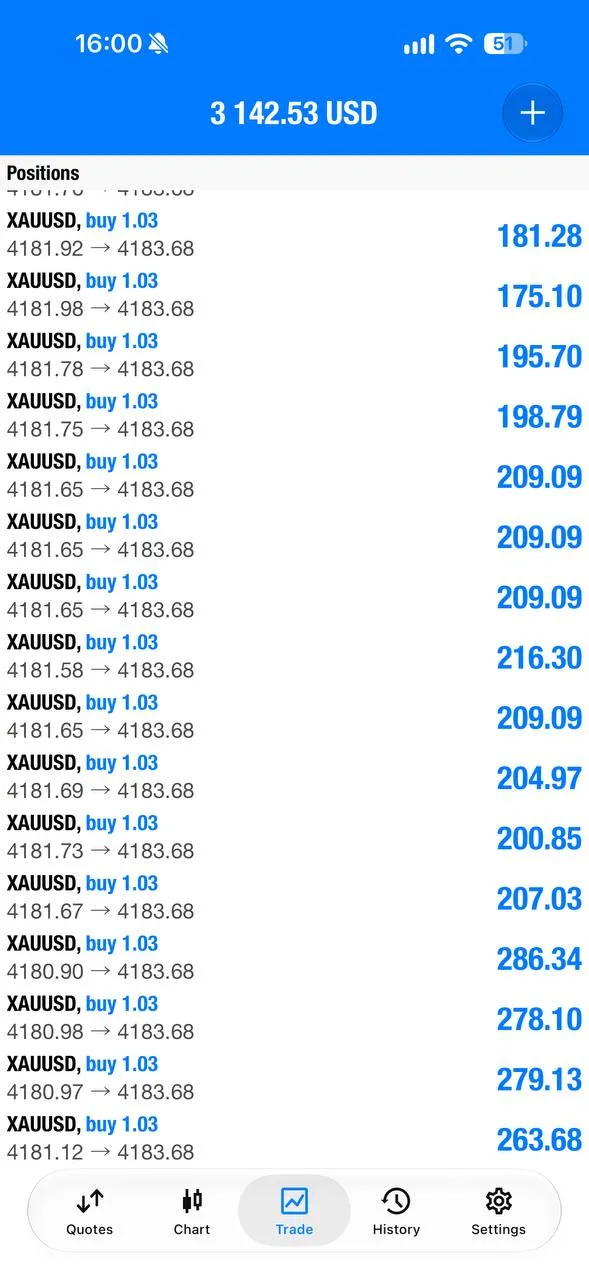
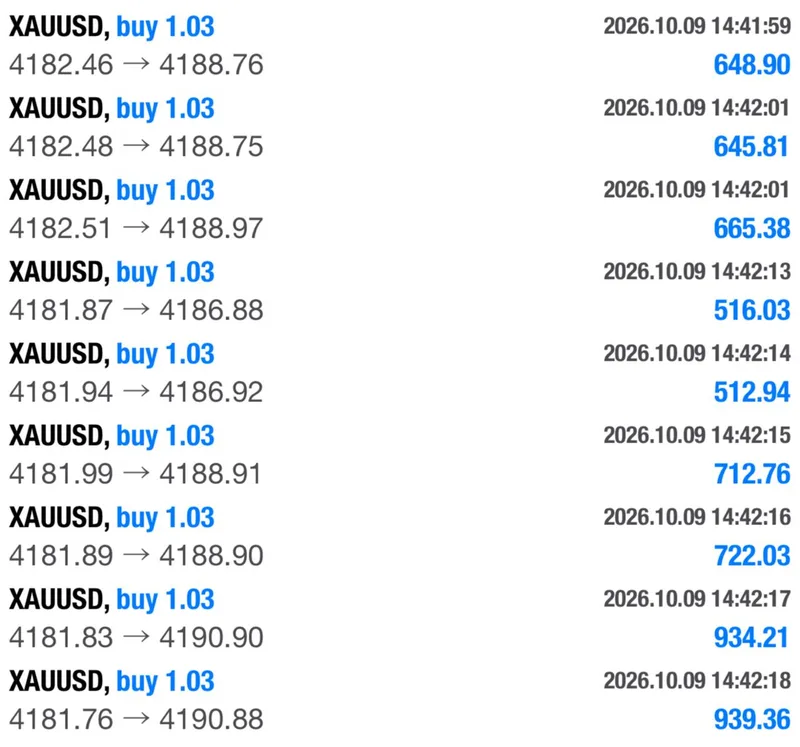
The next setup brought the energy back, but not a straight line upward. Mo posted “Turn into bluessss come on,” then “Back in blues again!!” Later came the unmistakable description: “TURNING BLUE RED BLUE RED BLUE RED,” followed by “Gold is really testing us today!!”
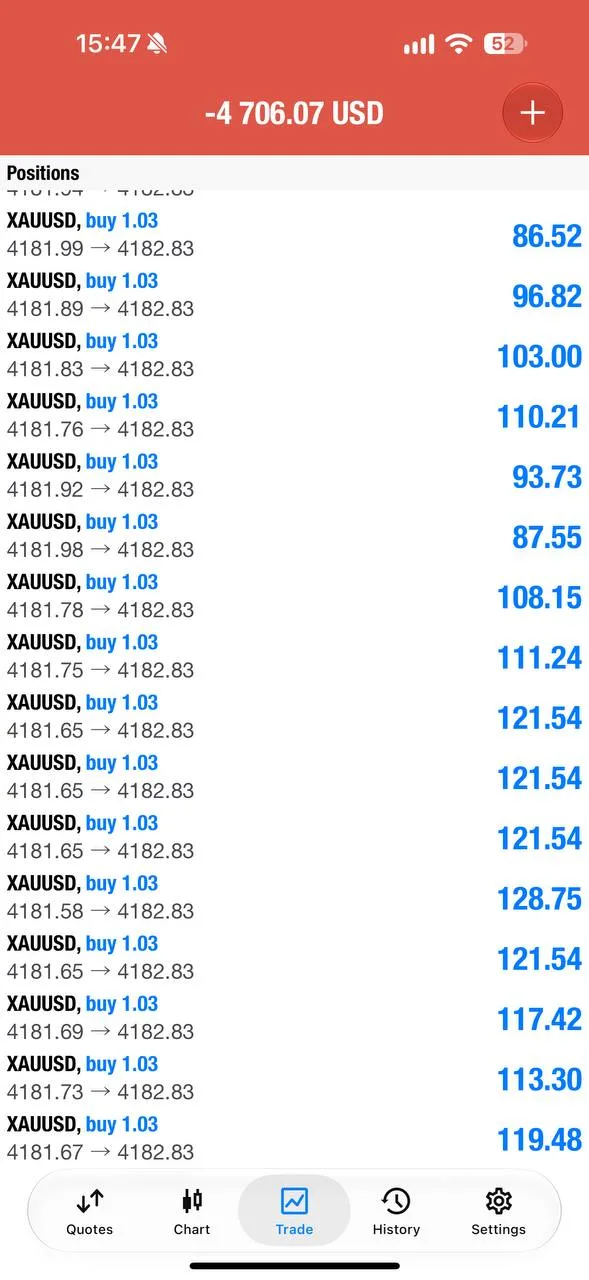
Here, blue and red describe the changing position displays and the experience of managing the trade—not an audited daily profit total. The accompanying screenshots give the story its texture: a red-header position snapshot, a later blue-header snapshot, and the updates in between.
The turning point was management, not celebration alone. Mo told followers to take profits if satisfied or recovered, set a first target on his worst entries, called for protection at entry, and then reported that he was out. His final update marked three targets reached. The excitement makes sense when read alongside those decisions.
Technical Outlook#
From analysis to an actual second setup#
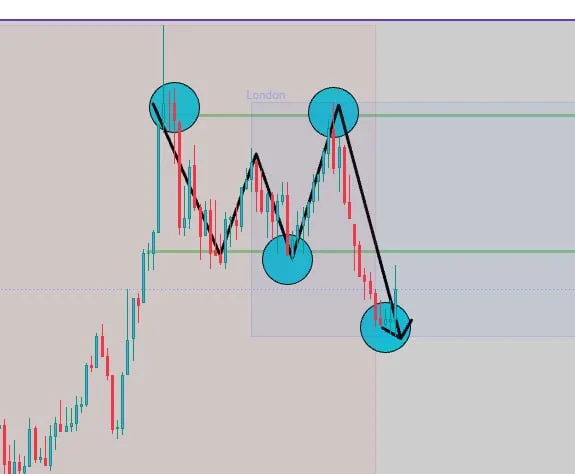
Mo's discussion combined the larger trend with a shorter-term entry idea. He questioned whether the earlier pattern of lower lows was changing and watched a zone he described as former resistance becoming support. These were his contemporaneous chart interpretations, shared before the later outcome.
At 11:21 UTC, he described a possible chart option but explicitly said it was not an entry. At 11:29, he was still waiting. A subsequent update pointed to a bullish 30-minute candle and a plan to wait for a lower price before buying. The second public buy announcement arrived at 11:38, followed by the detailed zone at 11:40.
For a reader new to trading, the distinction is useful: watching a promising chart and announcing a trade are different decisions. The channel showed the transition rather than presenting every analysis message as another executed trade.
The levels were part of October 9's decisions#
The second setup used a 4,184.8–4,180 buy zone, a planned stop at 4,175 and staged targets beginning at 4,187, 4,189 and 4,191. Later messages show how Mo responded while that idea was under pressure. These are historical levels, not a new invitation to buy at the same prices.
The October 8 report on targets and protection offers a useful comparison: reaching a target and deciding how much exposure to keep are related, but separate, parts of trade management.
Trading Signals#
First buy: the loss was acknowledged publicly#
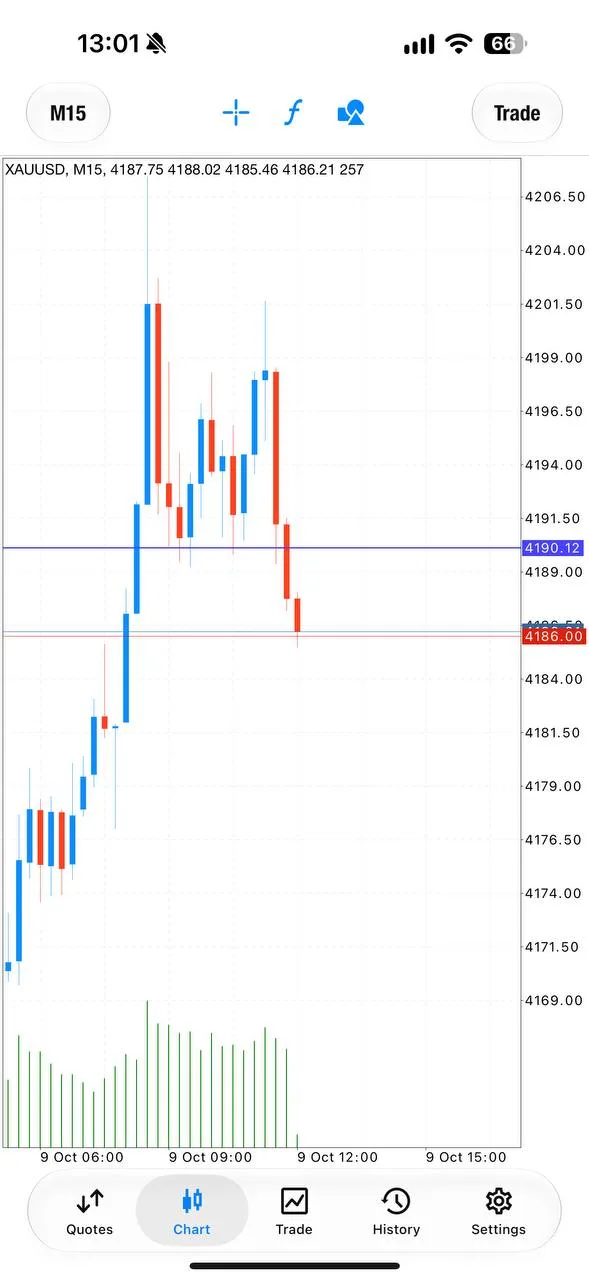
The 08:39 announcement and 08:41 parameter post form one public setup. The stated entry zone was 4,194.4–4,190, with a planned stop at 4,186 and targets starting at 4,197.
The channel then discussed the zone and risk before issuing the loss-cut instruction at 09:00. That unsuccessful attempt stays in the recap. Its exact cash loss cannot be calculated from the announced zone alone.
Second buy: a volatile ride, with decisions along the way#
The 11:38 announcement and 11:40 parameter post form the second setup. The source record shows this sequence:
| UTC | Public update | What changed for the trade |
|---|---|---|
| 11:40 | Buy zone 4,184.8–4,180; planned stop 4,175 | A new setup followed the analysis pause |
| 11:48 | “Turn into bluessss come on” | Mo shared the changing position display |
| 12:01 | “Back in blues again!!” | Another position snapshot accompanied the update |
| 12:16 | “TURNING BLUE RED BLUE RED BLUE RED” | The trade was still fluctuating, not an effortless run |
| 12:21 | Take profits if satisfied or recovered; “YOU CAN DECIDE URSELF!!” | Followers were given discretion to stop |
| 12:23 | TP1 at 4,187 on the worst entries | Mo described an exit measure during high volume |
| 12:31 | Move protection to breakeven | The channel called for protection around entry |
| 12:39 | “I‘m completly out of all positions!!” | Mo reported his exit from the second setup |
| 13:45 | TP1, TP2 and TP3 checked off | The final target report replied to that exit message |
“Breakeven” here means moving protection toward the entry price. It does not remove the effects of spreads, fees or slippage.
The finish: three targets reported in the same outcome chain#
The final post did not float outside the day's trade story. Its reply chain connects the three-target summary to the all-positions-out update, and that exit to the second buy setup.
The supported conclusion is clear: Mo ended the session reporting three completed targets after a difficult second buy. It is not a third separately documented setup. Nor does three checked targets establish that every originally listed target was reached—the setup also contained higher and open-ended targets.
These are public channel reports and shared position/history images, not an independent account audit. They support the reported sequence and outcome, but do not establish a net cash result for the entire day or identical fills for every follower.
Signal Performance Breakdown#
One loss, then a linked three-target finish#
| Public setup | Reported outcome | Context that belongs beside it |
|---|---|---|
| First buy, 08:39/08:41 UTC | Loss-cut instruction at 09:00 | Mo acknowledged the failed attempt before analyzing again |
| Second buy, 11:38/11:40 UTC | Reported exit at 12:39; linked TP1–TP3 finish at 13:45 | Blue/red swings, discretionary profit-taking and protection updates preceded the finish |
The second sequence supplied the comeback energy. The first loss supplied the context. Removing either would flatten a session whose most revealing feature was how the trade was managed while the result was still uncertain.
Members described the move in their own words#
The public feedback added more than a row of checkmarks:
- Mohammed: “Fully recovered and profit.”
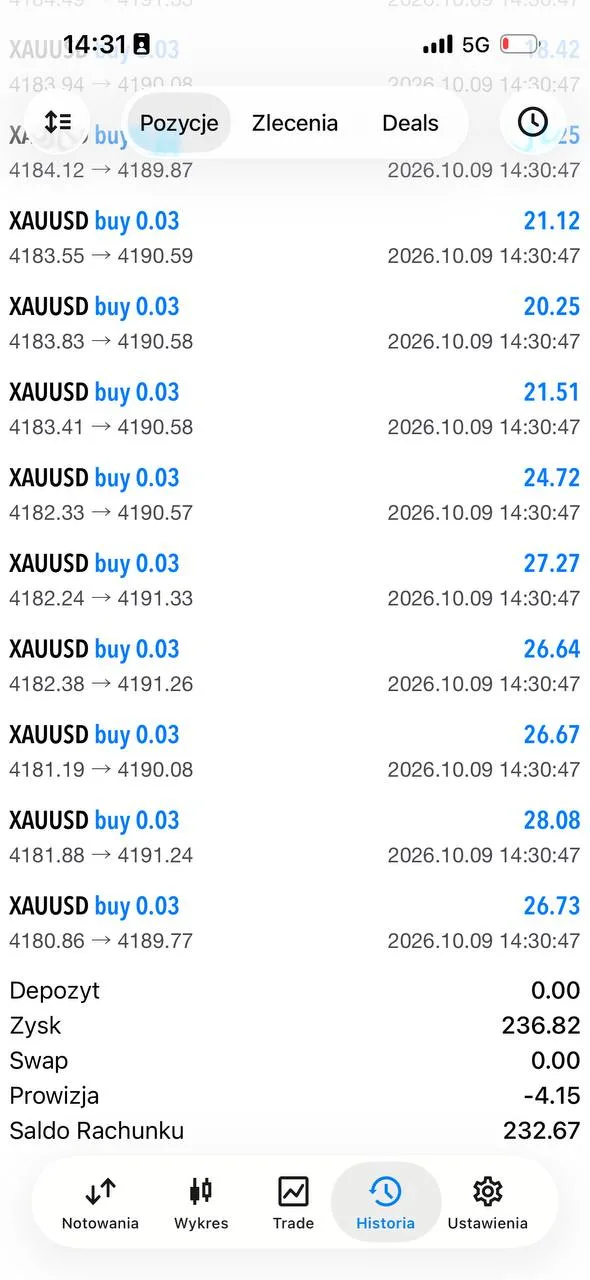
- A member who shared a trading-history image: “Recovered with good profit!”
- Maram M: “enjoy watching your explanation and take the profits as well.”
- Another member: “Didn’t fully recover but that rocket was INSANE!!!”
That last response carries both halves of the experience: excitement about the move and a personal result that did not fully recover.
Member statements describe their own experience. They are not a community-wide success rate. The selected history image appears below alongside its original recovery comment.
For another day-by-day comparison, see the October 7 loss-and-rebound recap. The value of comparing sessions is the decision sequence, not expecting the same result from different entries.
Execution Lessons#
Let the next setup earn its place#
An earlier loss does not make the next trade necessary. On October 9, the public channel showed analysis and waiting before the second buy. Readers could see a new idea taking shape rather than a loss being hidden beneath another entry.
Treat blue/red swings as a management problem#
The position updates were dramatic, but the actionable part of the recap is what Mo did around them: discuss profit-taking, set an exit target, call for protection and report the exit. Seeing a position turn positive is not the same as deciding what to keep exposed.
Your stopping point can differ from someone else's#
“YOU CAN DECIDE URSELF!!” belongs with the profit-taking message. Members had different entries and outcomes; one person's recovery did not require another person to keep trading. The session can be exciting without turning someone else's target report into an obligation to chase.
What The Day Means Going Forward#
October 9 ended with a three-target report, but the route there is what makes the recap distinctive: loss, explanation, patience, a second buy under pressure, then management and a reported finish.
For prospective followers, that is a concrete way to assess Gold Trader Mo. The public channel showed the unsuccessful attempt and the analysis as well as the later targets. Members responded not only to the result, but also to the explanation they watched along the way.
The October 6 recap of two buy sequences gives another comparison without treating these old levels as a future signal. Each new trade needs its own reasoning and risk decision.
If that style of explanation is what you want to follow, message @GTMOBest for free gold signals and access support. Read the public updates and decide whether the approach fits your experience and risk tolerance.
FAQ#
Did Mo report three targets at the end of the session?#
Yes. The final October 9 post marked TP1, TP2 and TP3 reached. It replied to the exit update attached to the second buy. That supports a linked three-target finish, not an independently audited net-day profit.
How many public buy setups were identifiable?#
Two: the 08:39/08:41 UTC sequence and the 11:38/11:40 sequence. The shorter announcements, parameter continuations, management updates and mirrored posts are not additional setups.
Did every member recover the first loss?#
No such conclusion follows from the feedback. Some members reported recovery and profit; another said they did not fully recover while praising the move's intensity. Personal entries and execution differ.
Is $4,184.585 the October 9 closing price?#
No. It is the OANDA XAUUSD intraday snapshot observed through TradingView at 21:41:06 Vietnam time on October 9, while the market was open. It is not a finalized close or official fix.
Connect with Gold Trader Mo#
Follow Gold Trader Mo for gold-session recaps, and the public @GTMO channel to read the trade and analysis updates in sequence. For free gold signals and access support, contact @GTMOBest.
Risk disclaimer: This report is for education and commentary, not personalized financial advice or a live trade recommendation. Trading involves risk; capital can be lost. Past performance, reported targets and member screenshots do not guarantee future results. Position sizing, spreads, fees and slippage can materially change outcomes.