Market Snapshot#
Four targets reported on the first gold buy; partial profits and a breakeven exit on the second. That was Mo’s October 15 public session: an early burst of target updates, followed by a much longer trade that needed patience, smaller exposure and a clear finish.
The first buy’s final update said four targets were done and no trades remained open. The second did not repeat that target run: Mo took profits along the way, then reported the remaining trades out at breakeven. Those different endings are what make the day worth reading—not a promise that every entry earned the same result.
Want to follow the next public update? Visit Gold Trader Mo’s public channel and message @GTMOBest for free gold-signal access and support.
| Market reference | Observation |
|---|---|
| Gold spot, OANDA XAUUSD via TradingView | $4,155.220 per troy ounce |
| Observation time | October 15, 2026, 21:00 Vietnam time (UTC+7) |
| Session status | Market open; intraday snapshot, not a final close |
The quote is the latest candle’s displayed value on the OANDA gold chart at that observation time. It is separate from the earlier trade levels below. All public-message times in this recap are UTC; add seven hours for Vietnam time.
Why The Tone Changed So Fast#
The first public buy moved quickly from anticipation to target reports. Mo posted the 4149.2–4145 buy zone at 08:08 UTC. Target one followed at 08:12, target two at 08:14 and target three at 08:18. Shortly afterward, the instruction changed from watching the move to protecting the remaining entries at breakeven.
By 08:23, the channel had reported target four. A later message anticipated target five, but the final account was narrower and clearer: last entries hit breakeven, followed by “Zero floating trade and 4 TP’s done.” The final first-buy update is the useful endpoint—not the earlier hope for another target.
The second buy brought a different rhythm. Mo described alternating blue and red positions, meaning unrealized gains and losses, as the entry zone filled. Profit-taking from higher entries, small re-entries near the bottom and a later move to breakeven mattered more than another round of target celebrations. The public record shows adaptation within the same setup, not a string of new signals every time the price bounced.
Technical Outlook#
The day’s two published zones give readers a practical map of the session. They are historical setup levels, not current instructions or independently established support and resistance.
- First buy: 4149.2–4145. The published stop was 4141. Planned fixed targets were 4151.2, 4153, 4155, 4157 and 4159, plus an open target. The public finish confirmed four targets—not all five fixed targets.
- Second buy: 4159–4155. The published stop was 4151. Planned fixed targets were 4161, 4163, 4165 and 4167, plus an open target. Mo repeatedly watched the 4161 area for a break, but the later exit did not confirm that those targets were completed.
At 21:00 Vietnam time, the separate OANDA snapshot of $4,155.220 sat within the second setup’s earlier published zone. That later observation does not establish anyone’s fill, whether an old position was still open or what happens next. A fresh update and a fresh risk decision would be needed before treating any earlier level as actionable.
For a contrasting session, the October 14 gold report follows a sell-target progression and a later buy burst. October 15’s distinguishing feature was two buys with different finishes, not a change from selling to buying.
Trading Signals#
First buy: a four-target run, then the remaining entries out#
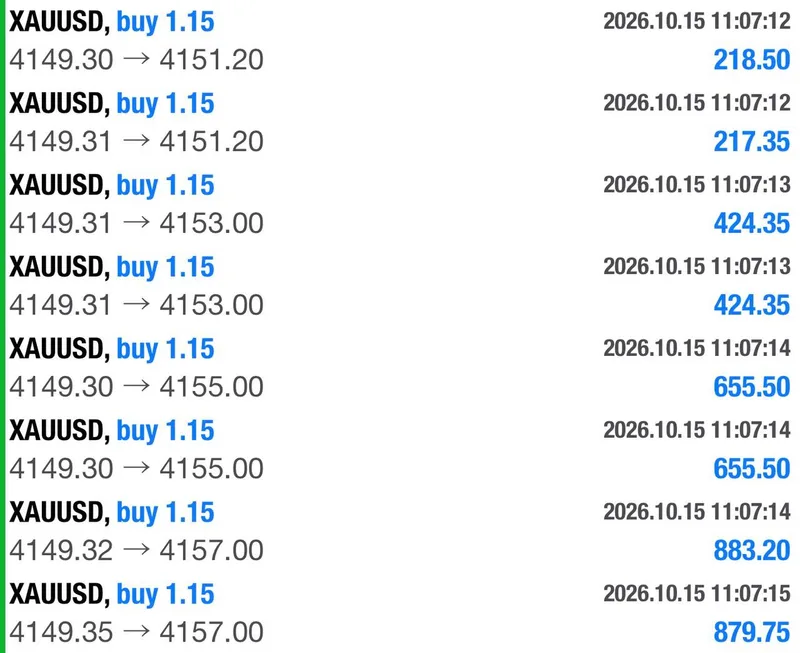
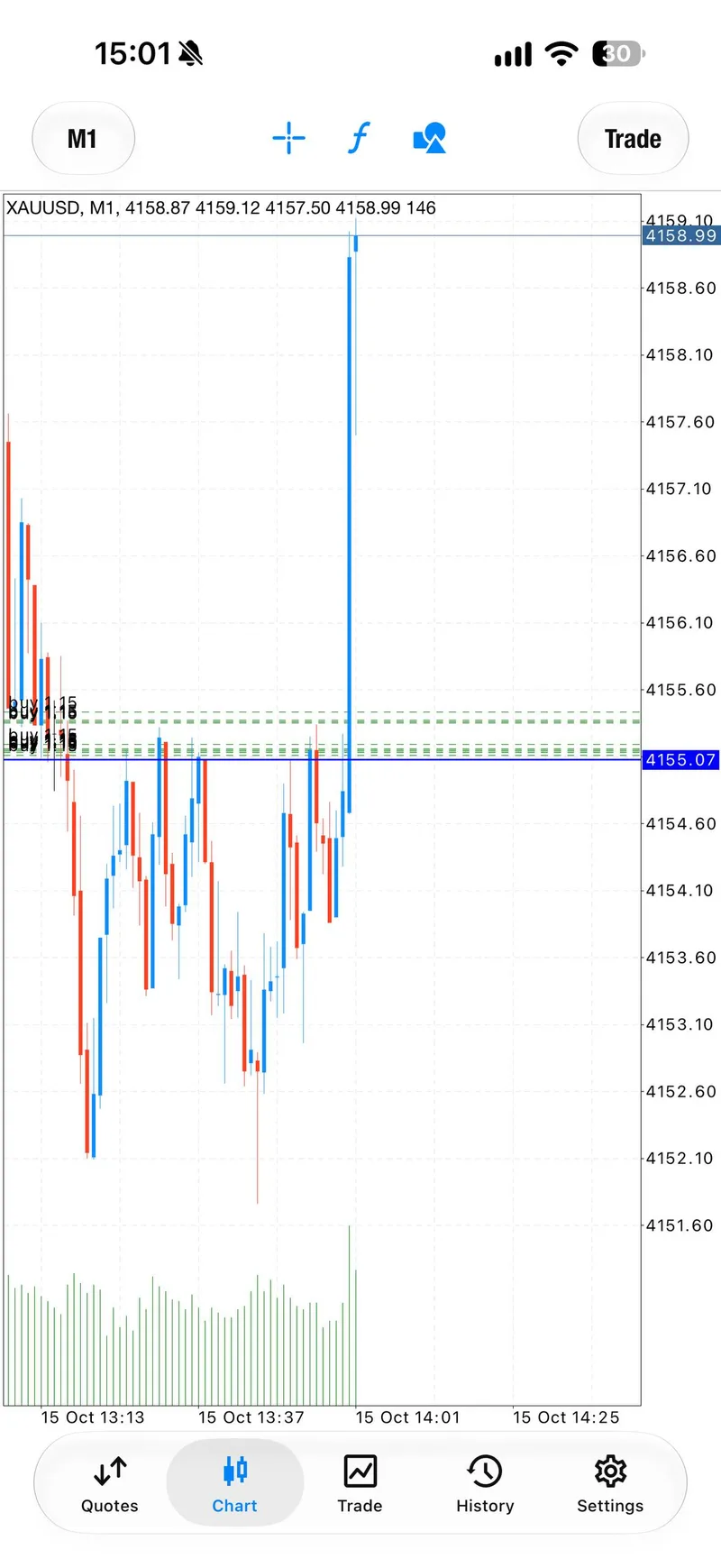
The 08:08 UTC setup published the zone, stop and targets before the subsequent target updates. That order matters: readers can follow the plan first and the management afterward.
The reply-linked sequence reported TP1, TP2, TP3 and TP4. At 08:18 UTC, Mo instructed breakeven protection. At 08:45, he said the last entries had hit breakeven; at 08:51, the final summary confirmed four targets and no floating trades. The fifth target remained an anticipated extension, not a completed result in the final report.
The strongest part of this first chapter is the complete account: staged targets, protection, then a stated exit. It does not require pretending every entry held to the highest planned level.
Second buy: work the zone, take partials, finish at breakeven#
The 09:33 UTC setup published a 4159–4155 buy zone with a 4151 stop. By 09:49, Mo said the entire zone had filled. The next updates described lower entries improving while the overall position shifted between blue and red.
At 09:57, he said he was taking some profits from the top entries. At 10:18, he described adding back only a small amount near the bottom of the zone. Further profit-taking appeared at 11:01, followed by a breakeven instruction at 11:02.
The 11:24 UTC finish was explicit: “Breakeven hit I’m out of all trades now!” Earlier partial profits and the final breakeven remainder belong in the same account. Calling the whole setup a zero-profit trade would erase the partials; calling it another four-target run would add a result the public finish did not claim.
Signal Performance Breakdown#
| Public setup | Reported progression | Last supported state |
|---|---|---|
| First buy, 4149.2–4145 | Targets one through four reported; breakeven protection introduced | Last entries at breakeven; four targets done and no floating trades |
| Second buy, 4159–4155 | Zone filled, partial profits, limited re-entries and breakeven management | Remaining trades out at breakeven; no completed target ladder claimed |
These are reported public outcomes, not audited account returns. Entry timing, position size, partial exits, spreads and execution costs mean individual results can differ. A stop moved to entry also does not make trading literally risk-free.
Members described taking profits in different ways#
Patrick wrote, “I took a profit of €400 and left 20% to run.” Nils described “10% Profit, 1 Runner still running.” Their messages show different choices about closing versus leaving a remainder; neither describes a result every reader should expect.
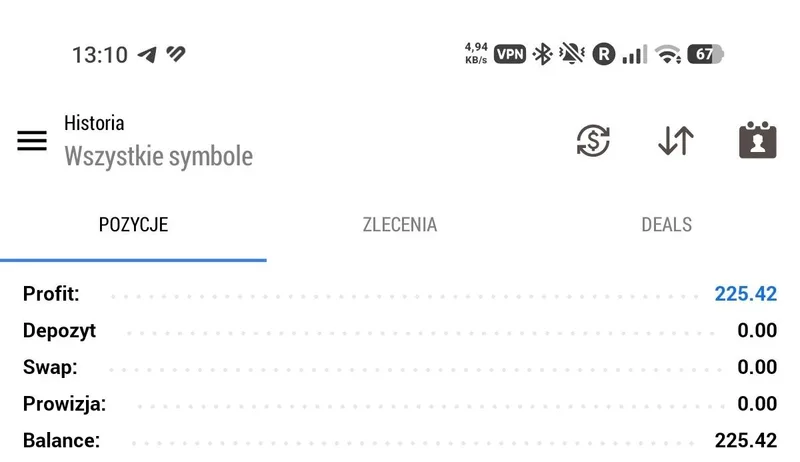
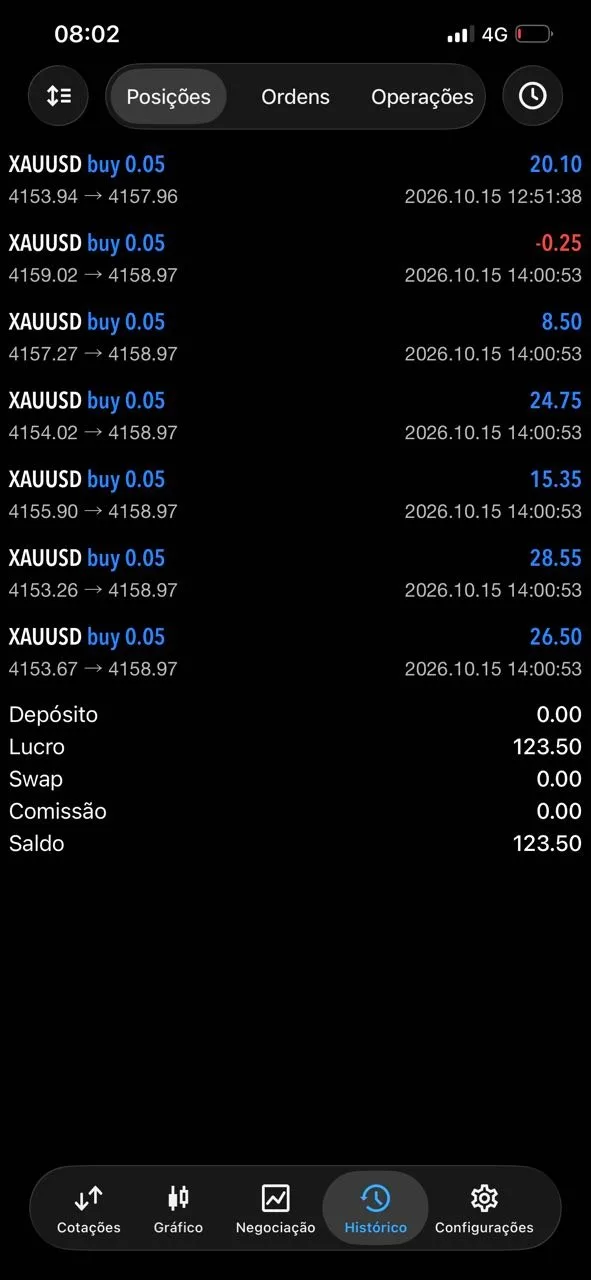
Marcin’s accompanying message said he made €225 “today and yesterday.” That two-day wording is important: the selected screenshot must not be turned into an October 15-only return. Alisson’s selected history image showed both positive entries and a small negative entry, rather than an uninterrupted list of wins.
There were 59 public member messages in the collected session, including greetings and questions—not 59 profit confirmations. This report presents four selected public screenshots: two trading updates and two member-posted images. The latter illustrate personal reports, not independently verified earnings or a complete record of all members.
The October 13 report offers another example of targets and a runner. Comparing the final state, rather than counting celebratory updates, gives a clearer view of how each session actually ended.
Execution Lessons#
Decide what to protect before the excitement peaks. The first buy’s target run was followed by an explicit breakeven instruction and a final statement that nothing remained open. That is more useful than assuming the strongest early move will keep extending.
A second setup can need a different kind of management. The later buy spent much longer moving around its entry zone. Mo’s updates on reducing exposure, taking partial profits and keeping re-entries small made the decision process visible while the result was still uncertain.
Read the last update as carefully as the first. “Target five incoming” is not the same as target five done. A profitable partial exit followed by a breakeven remainder is not the same as every entry closing flat. October 15 rewarded careful reading as well as trade management.
What The Day Means Going Forward#
The first buy supplied the fast four-target story; the second supplied the slower management story. Together, they show why following Mo means watching the decisions through to the exit, not just copying an entry line and disappearing.
No verified macro-catalyst claim is needed to explain that public sequence. This recap does not attribute the move to a policy decision or a news release, and the market snapshot is not a closing-price forecast.
For the next session, keep the same distinction: a published plan is the starting point; later position changes and the final exit complete the picture. The October 12 report adds a further example of targets followed by protection, under a different day’s conditions.
FAQ#
Did the first gold buy reach every planned target?#
No. The final public summary reported four targets completed and no floating trades. A fifth target had been anticipated earlier, but it was not confirmed in that final account.
Was the second buy simply a breakeven trade?#
The remaining trades exited at breakeven, according to Mo’s last update. Earlier messages described partial profit-taking. Both stages matter; the public record does not supply an audited net cash return for the whole setup.
Is $4,155.220 the October 15 gold close?#
No. It is an OANDA XAUUSD intraday observation via TradingView at 21:00 Vietnam time on October 15, 2026, while the market was open. It is not a finalized daily close or an official benchmark fix.
Where can I follow the next public update?#
Follow @GTMO, and contact @GTMOBest for free signal access and support. Read the complete update sequence and assess your own risk rather than treating this historical recap as a new trade instruction.
Connect with Gold Trader Mo#
Follow Gold Trader Mo for clear session recaps, public trade context and the decisions behind the outcome. For free gold-signal access and help getting started, message @GTMOBest.
Risk disclaimer: This report is for education and commentary, not financial advice or a live trade recommendation. Gold and leveraged CFD trading involve substantial risk; capital can be lost. Past performance and reported member results do not guarantee future returns. Breakeven instructions cannot eliminate execution, spread, fee or slippage risk.