Market Snapshot#
Four sell targets reported, then a short buy burst: October 14 was about catching the move and protecting what it gave. Gold Trader Mo’s morning sell unfolded in public—from an uncomfortable retracement to partial profit-taking, stop-to-entry guidance and a fourth-target confirmation. Later, followers saw a separate upward burst shared on the same public channel, with another instruction to take some profits rather than chase indefinitely.
The strongest evidence is the sequence, not a single celebratory screenshot. Mo reported 110+ pips and TP3, then explicitly confirmed TP4 on the original sell. The later buy updates reported 80 pips. These are results shared on the public @GTMO channel, not an audited account-wide cash return or a promise that every follower had the same outcome.
Want to follow the next public setup and understand the updates? Message @GTMOBest for current free-access and support details.
| Market observation | October 14 snapshot |
|---|---|
| Instrument / provider | XAUUSD gold spot / OANDA |
| Latest displayed price | 4,092.870 USD/oz |
| Observed at | October 14, 2026, 21:02:25 +07:00 (14:02:25 UTC) |
| Session / chart | Market open; 1D candlestick chart |
The quote was observed on TradingView’s OANDA:XAUUSD chart. It is an intraday snapshot, not a finalized daily close. The trading screenshots below show earlier moments; their prices are historical evidence, not the latest market quote.
Why The Tone Changed So Fast#
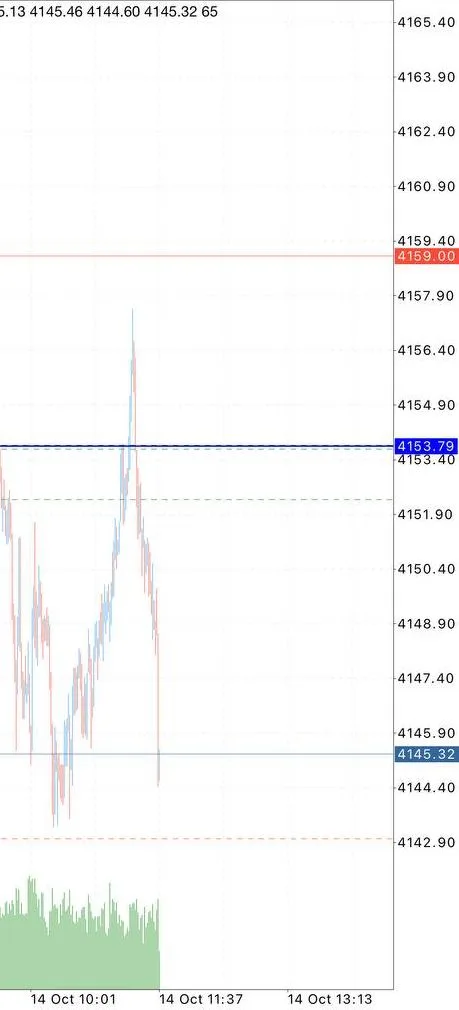
The morning began with a bearish idea, but not an immediately comfortable entry. Mo posted “Gold sell now” at 08:00 UTC, followed by the 4,149.3–4,154 zone and its stop and targets at 08:02. As gold retraced, he explained why he was not simply buying the support: he preferred the larger bearish direction. That was his stated trading view, not a verified forecast of what gold had to do.
The pressure was visible. At 08:16, the stop was widened from 4,157 to 4,159. At 08:25, Mo still described floating losses. Soon afterward, the updates turned to “blues”—his shorthand for profitable positions. By 08:35, he said he had closed some profitable entries and was keeping the best ones.
That transition matters for understanding this particular trade: it was a sell managed through an adverse move, then a favorable one. There is no source-backed reason to label it a realized-loss recovery day. Nor should the eventual targets make the wider stop disappear from the account of what happened.
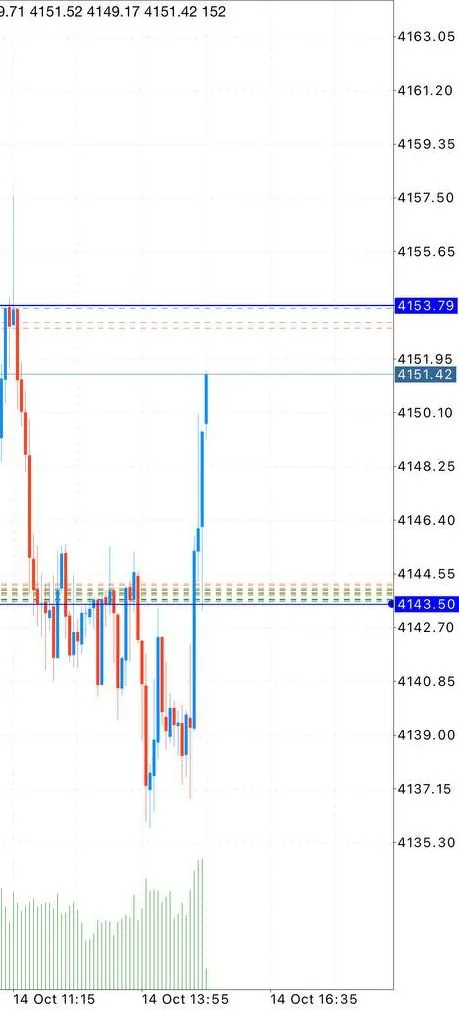
The later chapter changed direction. Posts shared publicly from 12:18 UTC showed a buy-side profit burst, taking part of the profit and moving stops to entry. Mo subsequently described having sold higher and bought lower. This recap does not attach a macroeconomic cause to those swings: the visible trading record is sufficient to tell the story without an unsupported news explanation.
Technical Outlook#
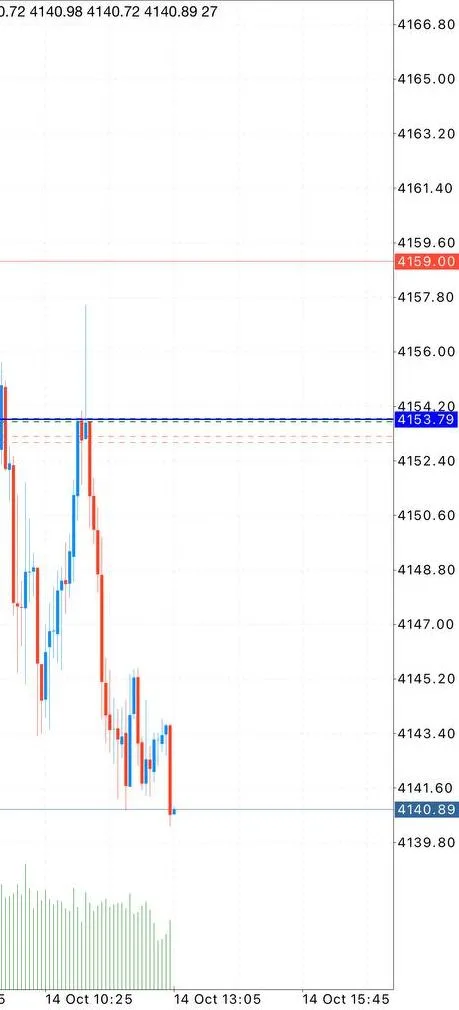
The useful levels here belong to the completed historical setup discussion, not a fresh instruction to sell at those prices. The morning zone was 4,149.3–4,154, with fixed targets at 4,147, 4,145, 4,143 and 4,141; an additional target was left open. The original 4,157 stop later became 4,159.
Mo used the retracement and a 30-minute candle wick to explain his bearish preference during the trade. That interpretation was posted before the fourth-target report. It shows followers the reasoning as it developed, rather than supplying only a hindsight chart after the move.
By the later 21:02 Vietnam-time observation, OANDA spot was below those morning target levels. That does not prove anyone held a sell all the way down, or earned the entire distance. The public sell record contains additional profit-taking, but no final exit for every remaining entry.
For a future setup, the practical questions are whether a rebound can hold and whether the next support or resistance reaction agrees with a fresh plan. The earlier entry zone cannot automatically become tomorrow’s resistance, and the later buy screenshots do not establish a new public entry range. Wait for a current, clearly specified setup rather than trading an old recap.
Trading Signals#
One public sell setup, followed by management—not four new trades#
The initial announcement and its parameter post were one sell sequence. Repeated updates, multiple entries within the zone and duplicate channel appearances were not additional setups.
| Stage | Public record on October 14, UTC |
|---|---|
| Sell announcement | 08:00:57: gold sell call |
| Parameters | 08:02:30: 4,149.3–4,154; original stop 4,157; four fixed targets and one open target |
| Risk change | 08:16:53: stop widened to 4,159 |
| Adverse phase | 08:25:24: floating losses acknowledged |
| Partial exit | 08:35:41: some profits closed; best entries retained |
| First target | 08:36:47: TP1 reported |
| Protection | 08:37:45: instruction to move stops to entry |
| Third target | 08:56:42: TP3 and 110+ pips reported |
| Fourth target | 10:05:46: TP4 explicitly confirmed |
| Further exit | 10:24:58: one more entry reported closed |
The fourth-target reply is linked to the original parameter post. Earlier “about to” messages are not being treated as completion. There was no separate explicit TP2 confirmation in the text used here; the later TP3 and TP4 reports describe the progression, not an independently reconstructed fill ledger.
The later buy burst was shared publicly after the entry#
The second chapter is different evidence. Followers saw forwarded buy-side charts and updates on the public channel; this was not another detailed entry-zone announcement posted there in advance. The public updates described taking half the profit and moving stops to entry, followed by the 80-pip report.
The recap includes that later upward move because it is part of what followers actually saw. It does not invent a buy zone, fixed target list or publicly confirmed final exit for every buy entry. The selected charts retain those two chapters without turning screenshot albums into a trade count.
Signal Performance Breakdown#
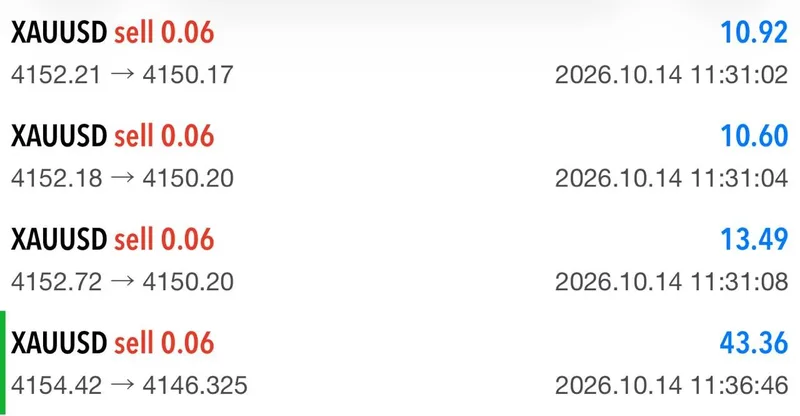
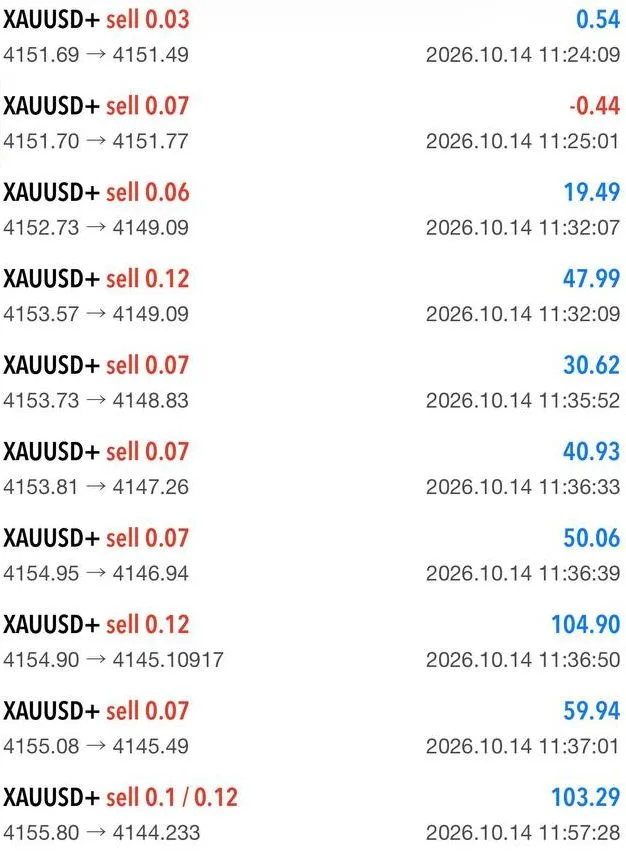
The morning sell’s reported outcome was strong: the progression reached the fourth fixed target, with 110+ pips reported at the third-target stage. The open target and remaining entries are a separate matter; a fourth-target report is not proof that every position was closed at the same price.
The later buy burst added an 80-pip report and another profit-protection instruction. Its publicly visible evidence is shorter than the sell record, so it should not be presented as equally detailed advance guidance. Neither chapter provides an audited net cash total for the entire day.
Members described both the result and their own exit choices#
One member wrote: “Coffee money! Good start. I played it safe and happy with results—no need to take all TP.” The selected trade-only crop accompanies that public message. It is a useful reminder that someone can be satisfied with an earlier exit even when the channel later reports more targets.
Jake’s feedback addressed the explanation rather than a cash figure: “These explanations are exactly what I’ve been asking for… it lets us see what goes in your mind when taking trades.” Patrick also shared a trading-history screenshot with a thank-you message. His selected crop retains individual trades, including a small negative row, rather than showing only the positive entries.
These are individual public member reports, not verified universal results. Account summaries and unrelated identifying details are excluded from the selected screenshots. The point is to see how followers responded to the same sequence—not to turn their screenshots into a guaranteed return.
Execution Lessons#
A good finish does not erase a larger initial risk. Widening the morning stop gave the trade more room, but also increased the potential loss for unchanged position size. Readers should notice that decision alongside the successful targets, not assume that keeping a losing position open is always justified.
Take some profit before demanding the whole move. Mo’s 08:35 update described banking some gains while keeping better entries. The fourth-target confirmation came later. Those are different decisions at different moments, and the anonymous member’s early exit shows why followers’ outcomes need not match the full target sequence.
A stop at entry is protection, not a literal zero-risk guarantee. The channel used emphatic wording, but costs, slippage and gaps can still affect the outcome. A breakeven instruction is a management step—not proof of a perfectly executed exit for every reader.
Separate a shared result from an advance signal. The morning sell had public parameters. The later buy chapter was shared after the entry. Both belong in the recap, but they serve different readers’ questions about what was available before and after the move.
For another example of target reports paired with management, read October 13’s two sells and continuing runner. The contrast with October 12’s three targets and remaining-entry protection helps distinguish target completion from the final state of a trade. October 9’s blue-red swings and three-target finish shows a genuinely different, mixed session; its recovery story should not be imposed on today.
What The Day Means Going Forward#
October 14’s standout was a public sell that progressed through four fixed-target reports, followed by a shorter buy-side burst shared with followers. The strength of the account is the visible sequence: an entry plan, an uncomfortable retracement, a wider stop, partial profits, protection and later target confirmation.
That is more useful than a slogan claiming gold was easy or that everyone made money. The session rewarded Mo’s reported direction and management, but still demanded decisions about exposure and exits. Following the explanation does not require copying a historical entry or holding for every last target.
Use the recap to decide whether the communication suits you: can you understand the setup, the changed risk and the difference between a result report and a fresh signal? For the next session, start with new information rather than assuming this day’s pattern will repeat.
FAQ#
Did Mo report all four sell targets on October 14?#
He explicitly reported TP1, then TP3 with 110+ pips, and finally TP4 in a reply to the original sell. The fourth-target completion is a channel-reported result; this recap does not independently reconstruct every order fill or claim the open target was completed.
Was the later buy an advance public signal?#
The public channel shared buy-side charts and result/protection updates after the entry, including an 80-pip report. It did not supply the same detailed advance entry-zone post as the morning sell in the evidence used here.
Is 4,092.870 the October 14 closing price?#
No. It was the latest displayed OANDA gold spot quote observed at 21:02:25 Vietnam time while the market was open. It is not a finalized daily close, settlement or official fix.
How can I ask about free access and support?#
Contact @GTMOBest for current access and support details. Ask how to follow the public updates and interpret their risk instructions; do not treat this historical recap as a live entry recommendation.
Connect with Gold Trader Mo#
Follow Gold Trader Mo and the public @GTMO channel for the next setup and its unfolding updates. If you want help understanding the process or current free access, message @GTMOBest.
Risk disclaimer: This report is for educational and informational purposes only and is not financial advice. Trading gold and leveraged products carries substantial risk, including the loss of capital. Past reported results do not guarantee future performance. Make independent decisions appropriate to your circumstances and never risk money you cannot afford to lose.