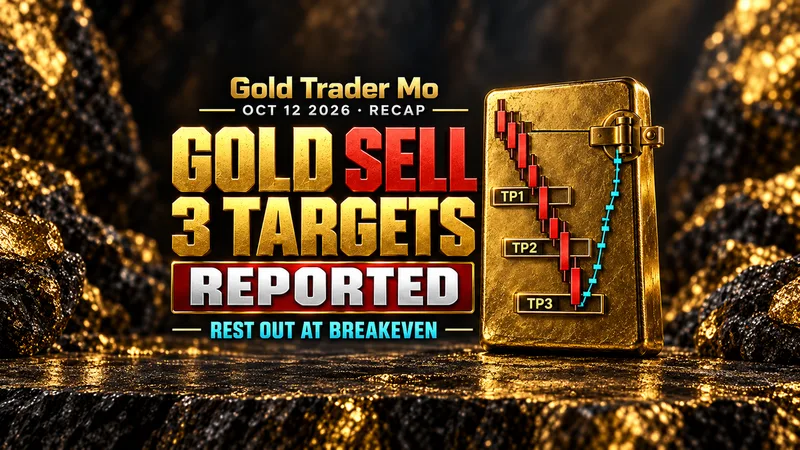
Market Snapshot#
Two public gold sells, two target runs—and a first-trade runner that was still being reported hours later. October 13 gave Gold Trader Mo followers a clear sequence to follow: the first sell reached all four fixed targets in Mo’s updates, while the second later reported three. Partial profit-taking and instructions to move stops to entry appeared along the way, not only in an end-of-day celebration.
The final public update in this recap reported the first sell still running at 160+ pips. These are results reported on the public @GTMO channel, not an audited account-wide profit total. The useful story is how Mo paired a bearish view with visible decisions as the trades developed.
Want to follow the next public setup and ask about free access? Message @GTMOBest for current access and support details.
| Market observation | October 13 snapshot |
|---|---|
| Instrument / provider | XAUUSD gold spot / OANDA |
| Current candle C | 4,170.675 USD/oz |
| Observed at | October 13, 2026, 21:01 +07:00 (14:01 UTC) |
| Session status | Market open; unfinished 1D candle |
The price comes from TradingView’s OANDA:XAUUSD chart. It is an intraday observation, not a finalized daily close. The public trading screenshots below show earlier moments and are not substitutes for this market quote.
Why The Tone Changed So Fast#
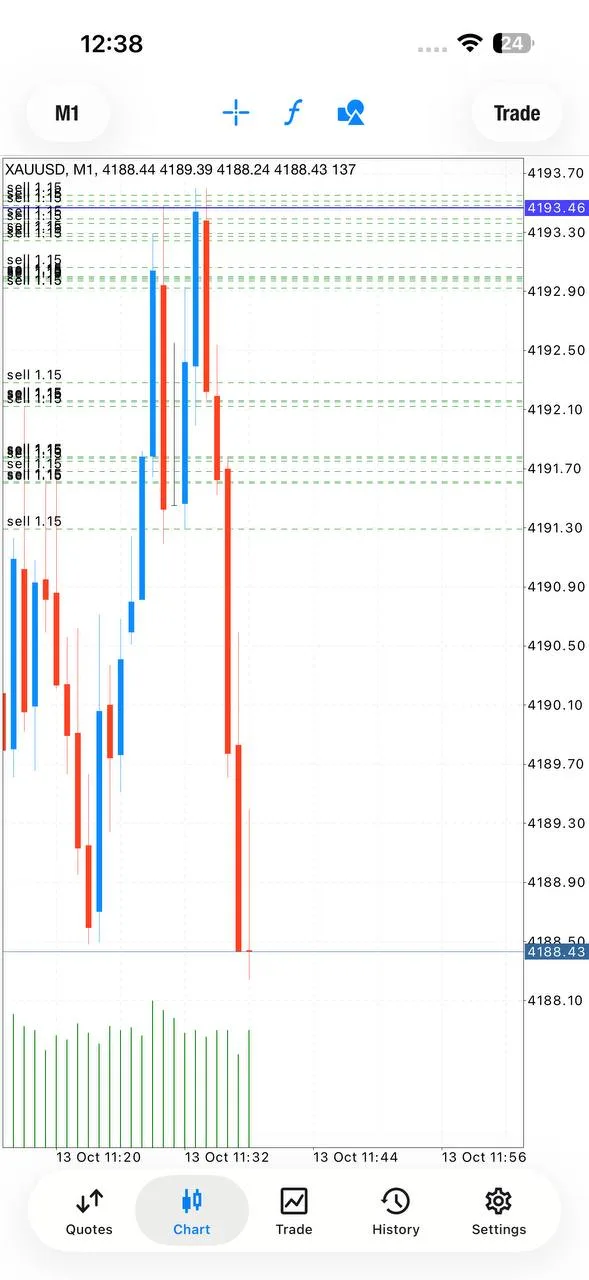
The first sell began with a call at 08:21 UTC and a detailed 4,190.5–4,194 zone at 08:24 UTC. By 08:35, Mo said the whole zone had filled and asked followers to stay close for instructions. The next updates moved quickly from a favorable turn to taking some profits, then protecting remaining entries.
The decisive change was from an entry idea to target-by-target follow-through. Mo reported the first target at 08:40, the second at 08:45, the third at 09:28 and the fourth at 09:30. The four-target update was reply-linked to the original setup. It was not a separate trade or a later unconnected claim.
A second sell followed at 10:10 UTC, with its levels posted at 10:11. Mo subsequently called the session a “WATERFALL DAY!” and reported three targets on the second sell at 11:23. That is the supported finish for this sequence—not confirmation of its fourth planned target.
All channel times in this report are UTC; add seven hours for Vietnam time. The contrast with October 12’s three-target-then-protection session is useful: today’s first sell continued beyond the fixed target ladder, rather than ending with the same exit story.
Technical Outlook#
The published levels explain the two trades without needing a hindsight-perfect chart. The first sell zone was higher, at 4,190.5–4,194, and its fixed targets stepped down through 4,188, 4,186, 4,184 and 4,182. The second zone was lower, at 4,186.2–4,190, with targets at 4,184, 4,182, 4,180 and 4,178.
For a reader reviewing the next session, 4,180–4,182 is a useful historical reference because it overlaps the late target areas of the two setups. 4,186.2–4,190 marks the second setup’s area, while 4,190.5–4,194 marks the first. These are prior-session reference zones, not fresh orders or guaranteed support and resistance.
The later OANDA snapshot was below both published entry zones. That supports the broad downward-session context, but it does not establish anyone’s fill, stop execution or remaining position. A fresh return through an old zone would need a new assessment; yesterday’s profitable direction does not make tomorrow’s sell automatic.
Trading Signals#
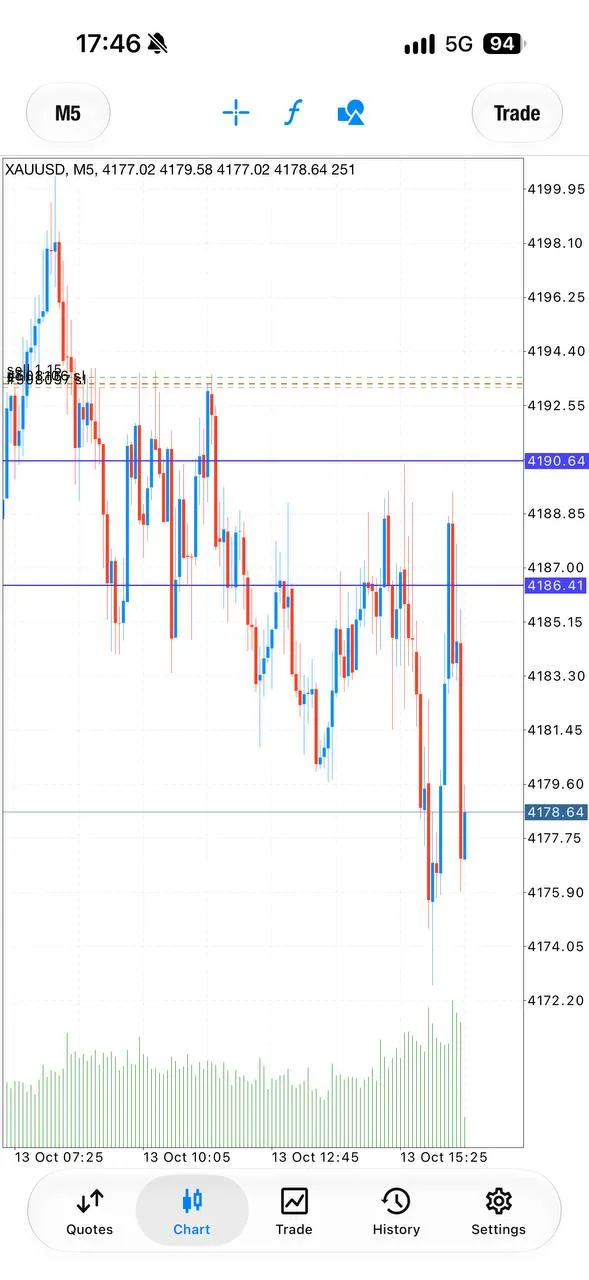
First sell: four fixed targets, then a reported runner#
The first detailed setup specified:
- Sell zone: 4,190.5–4,194.
- Initial stop: 4,197.
- Fixed targets: 4,188 / 4,186 / 4,184 / 4,182, followed by an open-ended target.
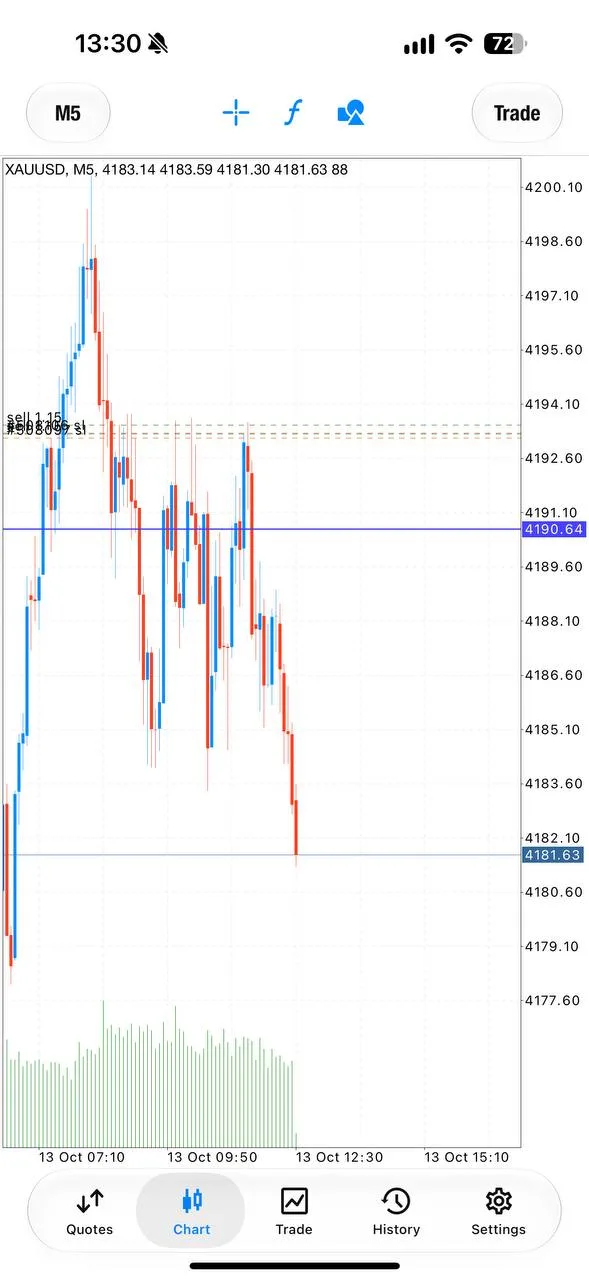
The 08:21 “sell now” call and 08:24 parameter post belong to one setup. At 08:37, Mo told followers to reduce risk and take some profits. At 08:39, he instructed them to move stops to breakeven. The target reports then advanced through all four fixed targets by 09:30.
The story continued after that milestone. At 13:46 UTC—20:46 in Vietnam—Mo’s latest first-sell update said the trade was still running at 160+ pips. The channel’s pip wording is retained as a reported measure; it is not converted into a dollar profit or assigned to every follower.
Second sell: three targets reported, with earlier protection#
The second detailed setup specified:
- Sell zone: 4,186.2–4,190.
- Initial stop: 4,193.
- Fixed targets: 4,184 / 4,182 / 4,180 / 4,178, followed by an open-ended target.
Mo instructed followers to set breakeven at 10:12 UTC and reported the first target at 10:13. At 10:15 he said he had taken some profits; the second-target report followed at 10:27. The 11:23 summary confirmed TP1, TP2 and TP3. The fourth fixed target remained unconfirmed in the public updates reviewed here.
Signal Performance Breakdown#
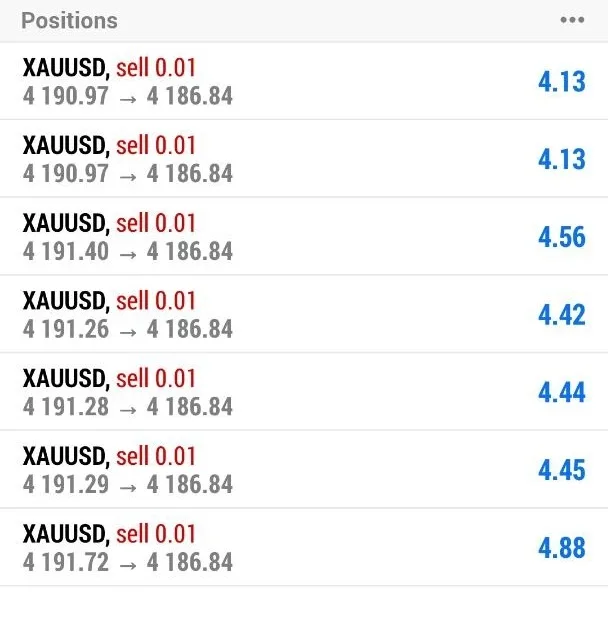
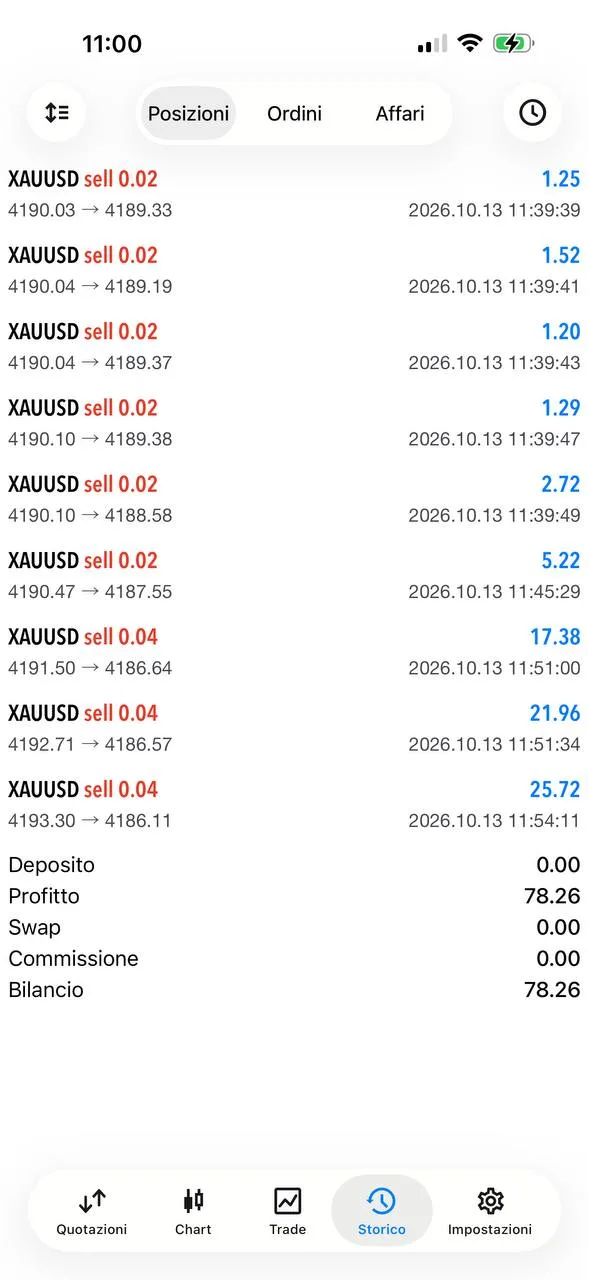
| Public sequence | Supported reported outcome | What should not be inferred |
|---|---|---|
| First sell | Four fixed targets reported; later 160+ pips with a runner still described as running | A final runner exit or everyone’s realized profit |
| Second sell | Three targets reported after partial profit-taking and breakeven guidance | Completion of the fourth target or an audited net result |
There were two public sell setups, not three. Announcements, detailed levels, management replies and target updates are parts of those sequences, not extra executions.
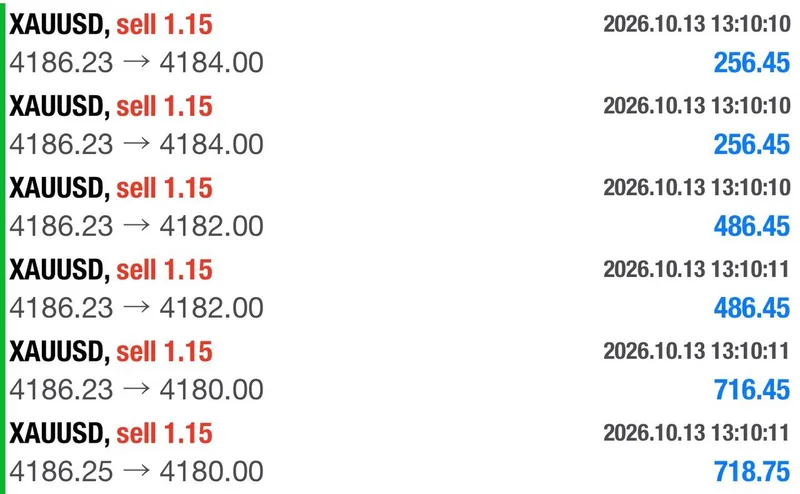
Members added their own view. Gus and Gerta shared trading screenshots after the first two targets had been reported; Patrick wrote, “160 and one more runner.” Patrick’s message did not specify a currency or unit, so it is not treated as a dollar figure or a separate 160-pip result. The selected screenshots below show member-reported experience, not a promise that all accounts matched Mo’s trade.
The first sell’s fourth target and later runner make this a different session from October 8’s two-target-and-protection recap. The comparison is about management and how far the public sequence progressed, not a league table of account returns.
Execution Lessons#
Take some profit without needing the final exit to be perfect. Mo’s first profit-taking instruction preceded the four-target completion report. On the second sell, he again described taking some profits while leaving the remaining trade protected. That gives a developing trader something more practical to study than an isolated winning screenshot.
Read the management replies, not only the entry post. The original stop and targets describe a plan. Later instructions can change remaining exposure. Moving a stop to entry seeks to limit downside, but it does not eliminate spread, commissions, slippage or execution risk—even when a channel uses “zero risk” language.
Keep each outcome attached to its trade. The first sell’s 160+ pip runner is not a second-trade result; the second sell’s three-target summary is not proof that every planned target was reached. Following those distinctions makes the public record more useful, not less impressive.
What The Day Means Going Forward#
October 13’s strongest takeaway is a complete public progression: two sells, targets reached, profits taken in stages and protection instructions while the trades were developing. The first sequence went through all four fixed targets and still had a reported runner late in the day. The second had three confirmed target reports by its final summary.
For someone deciding whether to follow Mo, that sequence is more informative than a headline profit number. It shows what was said before the outcome and how the instructions evolved. For someone preparing for the next session, the sensible next step is to watch a fresh setup—not reuse October 13’s entries as live advice.
Risk handling also matters on less straightforward days. October 9’s blue-red swings and three-target finish offers a contrasting example of why a single favorable session should not become a promise about the next one.
FAQ#
How many public gold setups were there on October 13?#
Two sell setups. Each had an initial announcement, a detailed level post and several follow-up messages. Those follow-ups do not create additional trades.
Did both sells reach every target?#
No such claim is supported. Mo reported all four fixed targets for the first sell. The second sell’s final summary reported three; its fourth planned target was not confirmed.
Was 4,170.675 the daily gold close?#
No. It was the current C of OANDA’s forming daily candle on TradingView, observed at 21:01 +07:00 on October 13. The market was open.
Does breakeven mean a trade has no risk?#
No. A stop near entry can reduce price exposure, but costs and execution differences remain. Position sizing and personal loss limits still matter.
Where can I ask about free access and follow the next update?#
Contact @GTMOBest for current free-access and support details, and follow @GTMO for public updates. Access terms should be confirmed directly rather than assumed from an old promotion.
Connect with Gold Trader Mo#
Follow Gold Trader Mo for the daily recaps, then message @GTMOBest to ask about free access and support. Use the public updates to learn how a setup, partial profit-taking and protection fit together—not simply to chase a result after it has happened.
Risk disclaimer: This report is educational commentary, not financial advice or a live trade recommendation. Trading involves risk; capital can be lost. Past performance and reported results do not guarantee future outcomes.